
弹簧颤振与共振:避免动态失效

弹簧颤振与共振:避免动态失效
作者 BQUQ Engineering Team 审核 BQUQ Quality Engineering 2025年10月19日 次阅读 ISO 9001:2015 认证工厂

弹簧颤振与共振:避免动态失效

简短回答:弹簧颤振是一种驻波压缩波,当激励频率接近弹簧自身固有频率时,它会沿螺旋弹簧上下传播。此时,线圈不再均匀偏转:某些线圈组提前闭合,局部应力可能超过静态设计值的2倍或更多,疲劳失效在预期寿命的一小部分后就会出现。解决方法是失谐弹簧,使其第一阶固有频率至少高于驱动频率15-20倍,或增加阻尼和预载。在实践中,这意味着改变线圈数、线径、端部条件或增加摩擦阻尼器——这些决策最好在设计评审时做出,而不是在现场失效之后。

什么是弹簧颤振,为什么它会破坏弹簧?

压缩弹簧不是刚性的力发生器。它是一个弹性线材柱,质量沿其长度分布。推动一端,扰动不会立即到达另一端——它以钢中的声速传播(弹簧钢丝约为5,100 m/s)。当一端的激励以与该波往返时间匹配的速率重复时,反射波相互增强。弹簧开始像拨动的琴弦一样“振铃”。

这就是颤振。可见的症状是单个线圈与施加的载荷异相闭合和重新打开。不可见的症状更糟:首先闭合的线圈承受的应力远高于静态计算预测,并且它们循环承受数百万次。

颤振之所以重要,是因为它将良性的静态设计转变为疲劳问题。一个按允许静态应力60%设计的弹簧在颤振条件下可能失效,因为颤振线圈处的动态应力幅值会倍增。典型结果包括:

  • 早期疲劳断裂,通常距移动端2-6圈
  • 噪声和振动传递到周围组件
  • 阀门、离合器和执行器中的负载精度损失
  • 相邻线圈之间的微动磨损和接触痕迹

颤振不是制造缺陷。如果应用激励它,制造完美的弹簧也会颤振。这就是为什么失谐属于设计阶段。

如何计算弹簧的固有频率?

标准的工程方法将弹簧视为一端固定、一端自由的均匀弹性杆,其基本固有频率为:

f_n = (1/4L) × √(k / m)

其中L是有效长度,k是弹簧刚度,m是线圈的有效质量。系数1/4适用于固定-自由情况;对于固定-固定(两端约束旋转和位移),使用1/2。

对于车间快速估算,一个广泛使用的实用公式是:

f_n ≈ 1.55 × 10⁷ × d / (N_a × D²)(Hz,d和D单位为mm)

其中d是线径,D是平均线圈直径,N_a是有效线圈数。这个公式使设计杠杆显而易见:更少的有效线圈、更大的线径和更小的平均直径都会提高固有频率。

参数对固有频率的影响实际调整
有效线圈数(N_a)强烈反比减少线圈数;使用更硬的线材
线径(d)正比增加d,减小D以保持刚度
平均直径(D)反比平方更小的D显著提高f_n
端部条件系数2尽可能约束两端
材料模量弱(√G)钢与不锈钢差异不大
预载/安装长度中等更短的安装长度提高f_n

大多数气门机构和往复机械工作中使用的实用规则:保持弹簧的第一阶固有频率至少是最高显著激励频率的15-20倍。低于13倍,认为可能发生颤振;低于10倍,几乎肯定发生。

实际机械中什么会激励弹簧?

颤振需要周期性输入。生产设备中的常见来源:

往复和旋转机械

发动机气门弹簧、压缩机阀、泵柱塞和凸轮驱动机构每转或每冲程产生一个脉冲。在3,000 rpm时,即50 Hz。固有频率为400 Hz的弹簧给出的比率为8——完全在颤振区内。

电磁阀和执行器循环

电磁阀、接触器和电磁执行器以几Hz到几百Hz的速率切换。电枢冲击在每个循环激励复位弹簧。这是工业控制硬件中颤振失效最常见的原因之一。

装配和运输振动

包装在振动组件中的弹簧可能被外壳的结构共振激励,而不是标称驱动频率。如果框架在180 Hz共振,弹簧的固有频率为200 Hz,即使“官方”驱动频率为25 Hz,弹簧也会颤振。

冲击和阶跃载荷

掉落载荷或硬机械止挡产生宽带脉冲,包含每个频率的能量,包括弹簧的固有频率。弹簧以其自身频率振铃衰减。重复冲击快速累积疲劳损伤。

如何失谐弹簧以避免共振?

失谐意味着将弹簧的固有频率移离激励频率。有五个杠杆,大致按成本效益顺序列出。

1. 减少有效线圈。固有频率与N_a成反比。从8个有效线圈减少到5个,f_n提高60%。为了保持相同的弹簧刚度,增加线径。这是最常见的失谐措施。

2. 增加线径并减小平均直径。由于f_n与d/D²成正比,几何形状的适度变化会产生大的频率偏移。在相同线圈数下,平均直径12 mm、线径1.6 mm的弹簧的固有频率大约是平均直径20 mm、线径1.6 mm的弹簧的2.3倍。

3. 约束端部。两端闭合且磨平、安装在防止端部旋转的座中的弹簧,其行为更接近固定-固定,与自由端假设相比,f_n大约翻倍。如果外壳允许,端部条件是免费的失谐。

4. 增加预载并缩短安装长度。将弹簧安装到更短的工作长度会提高有效刚度并减少参与波的质量。两者都推高f_n。

5. 增加阻尼。摩擦阻尼器、具有相反螺旋的嵌套弹簧或弹性体插入物耗散颤振能量。阻尼不会移动固有频率,但会限制共振时的振幅。当几何形状被包络约束锁定时,这是后备方案。

失谐方法频率变化成本影响何时使用
减少有效线圈大(+40-80%)大多数重新设计的首选
更大线径,更小D大(+50-150%)低-中当刚度必须保持恒定时
约束两端~2倍当外壳可以修改时
增加预载中等(+10-30%)当安装高度允许时
增加摩擦阻尼器仅振幅中-高包络锁定,高循环次数

颤振与其他动态失效模式

颤振经常与两个邻近模式混淆。区分它们可以节省诊断时间。

失效模式根本原因特征修复
颤振/共振激励接近固有频率线圈闭合波,中跨断裂失谐,阻尼,预载
旋转疲劳弯曲应用中的循环扭转距端部1-2圈处断裂应力消除,表面处理
过载屈服静态应力高于屈服永久变形,自由长度损失更大线径,更少线圈,更好材料
腐蚀疲劳循环应力加腐蚀环境断裂源处点蚀材料升级,涂层,排水

如果弹簧在中跨处失效,断口平坦、波浪状,并且组件以固定速度运行,颤振是第一个假设。如果它在端部失效,带有45°剪切唇,则查看旋转疲劳或端部条件应力集中。

颤振敏感弹簧的设计评审清单

在发布弹簧图纸进行生产之前,确认:

  • 激励频率已知,包括高达3阶的谐波
  • 弹簧固有频率至少是最高显著激励的15倍
  • 端部条件已指定(闭合、闭合磨平、开放、约束)
  • 安装长度和预载已定义,而不是留给装配工
  • 检查最大动态应力幅值,而不仅仅是静态应力
  • 表面条件已指定——在无法消除颤振的地方,喷丸提高疲劳极限
  • 样品弹簧在刚度和安装高度下进行负载测试

对于处理疲劳方面的团队,弹簧旋转疲劳涵盖了弯曲-扭转相互作用,弹簧过载屈服涵盖了颤振损伤所基于的静态极限。根据图纸验证成品零件在弹簧负载测试中涵盖。

制造公差在哪里适用

颤振计算假设标称尺寸。实际弹簧在线径、线圈数、自由长度和端部垂直度上有公差。这些公差会移动固有频率,这就是为什么设计恰好处于15倍比率的弹簧在生产批次的某些单元中仍可能颤振。

对固有频率的典型指示性公差影响:

变量典型公差大约f_n偏移
线径1.5 mm上±0.02 mm±2%
有效线圈±0.25圈±3%
自由长度±1%±1%
端部垂直度±1-2%
材料模量批次间±3%±1.5%

最坏情况叠加,标称15倍的裕度在分布尾部可能降至13倍。设计到18-20倍标称值提供真正的裕度。这是BQUQ在弹簧图纸上明确指定有效线圈数和端部条件而不是留给车间自行决定的原因之一——我们东莞工厂的四条生产线运行压缩、拉伸和扭转弹簧,控制线圈数并记录负载测试。

何时重新设计 vs. 何时阻尼

并非每个颤振问题都需要新弹簧。一个有用的决策规则:

重新设计当频率比低于13倍、弹簧仍处于原型阶段或外壳包络可以吸收几何变化时。在项目生命周期内,重新设计几乎总是更便宜。

阻尼当比率在13倍到15倍之间、外壳是固定工装或激励是宽带而非单频时。在这些情况下,摩擦阻尼器或嵌套反向缠绕弹簧对限制振幅而不改变频率。

接受并监控仅当循环次数低(大约低于10⁴次循环)且失效后果与安全无关时。即使如此,也要在安装高度下进行负载测试和短时耐久运行来验证。

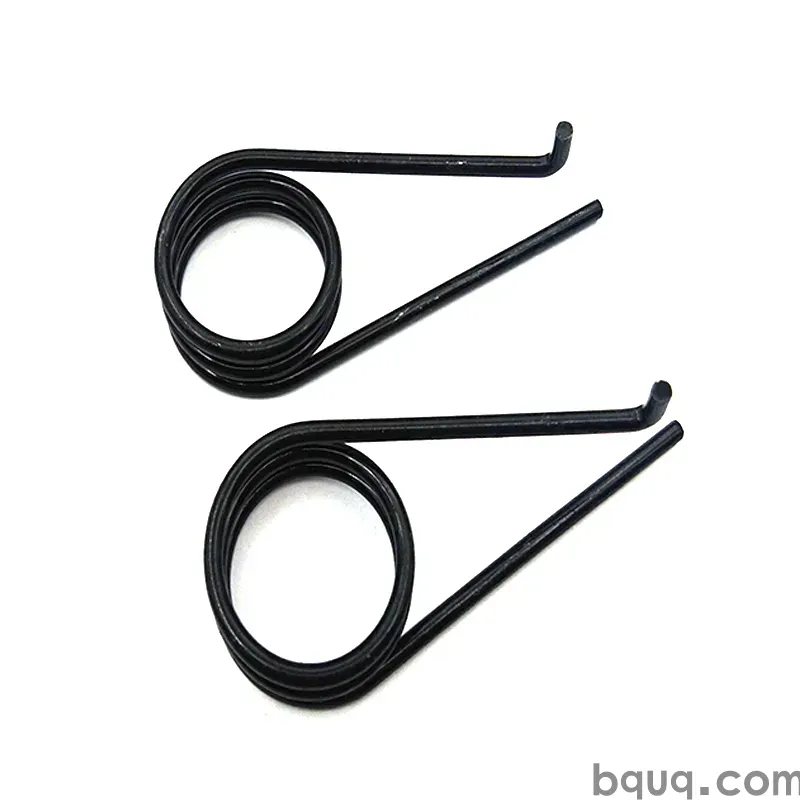
对于定制压缩弹簧拉伸弹簧,失谐决策最好在报价阶段与供应商一起做出,因为线圈数和线径选择同时与刚度、应力和密实高度相互作用。扭转弹簧有其自身的动态行为——腿几何形状增加了第二个共振模式,很容易被忽略。

常见问题

问:压缩弹簧的安全频率比是多少?

答:大多数机械设计实践将弹簧第一阶固有频率与最高显著激励频率之间的最小比率视为15倍,对于高循环应用,首选20倍。低于13倍,可能发生颤振;低于10倍,基本上肯定发生。由于制造公差会使固有频率偏移几个百分点,设计到18-20倍标称值提供真正的裕度,而不是纸面通过。

问:弹簧会在其固有频率以外的频率颤振吗?

答:是的。颤振可以在次谐波和基频的更高谐波处被激励,而不仅仅是在精确的固有频率处。来自冲击或硬止挡的宽带脉冲包含整个频谱的能量,因此即使标称驱动频率很远,弹簧也可以以其固有频率振铃。这就是为什么框架和外壳共振与驱动频率本身一样重要。

问:喷丸能防止弹簧颤振失效吗?

答:喷丸通过诱导表面压缩残余应力来提高疲劳极限,因此它延迟或防止颤振线圈处的裂纹萌生。它不能阻止颤振发生,也不能降低动态应力幅值。当失谐无法完全实现时,将喷丸作为补充,而不是作为首先正确获得频率比的替代品。

问:如何测量弹簧是否颤振?

答:粘贴在单个线圈上的应变片,或移动端的高速称重传感器,将显示远高于驱动频率的负载振荡。一个更简单的现场检查是在线圈堆上使用频闪仪或高速相机:颤振线圈显示行波闭合波,而不是均匀偏转。声学测量也有效,因为颤振以固有频率辐射特征音调。

问:更换材料能解决颤振问题吗?

答:很少单独解决。固有频率取决于剪切模量除以密度的平方根,大多数弹簧钢在该比率上彼此相差几个百分点以内。从琴钢丝切换到铬硅或302不锈钢会改变疲劳强度和耐腐蚀性,这影响弹簧在颤振下存活的时间,但不会将固有频率移动到足以使设计失谐。

相关资源

由BQUQ工程团队撰写。BQUQ(东莞)在一家ISO9001工厂内运行CNC加工(±0.005 mm)、金属冲压、定制弹簧和散热器生产。从中国东莞直接采购——12小时内报价:sc@bquq.com | WhatsApp +86 13713157787 | www.bquq.com
联系我们报价
获取报价
我们使用cookie来改善您的在线体验。继续浏览本网站即表示您同意我们使用cookie

Cookies

Please read our Terms and Conditions and this Policy before accessing or using our Services. If you cannot agree with this Policy or the Terms and Conditions, please do not access or use our Services. If you are located in a jurisdiction outside the European Economic Area, by using our Services, you accept the Terms and Conditions and accept our privacy practices described in this Policy.
We may modify this Policy at any time, without prior notice, and changes may apply to any Personal Information we already hold about you, as well as any new Personal Information collected after the Policy is modified. If we make changes, we will notify you by revising the date at the top of this Policy. We will provide you with advanced notice if we make any material changes to how we collect, use or disclose your Personal Information that impact your rights under this Policy. If you are located in a jurisdiction other than the European Economic Area, the United Kingdom or Switzerland (collectively “European Countries”), your continued access or use of our Services after receiving the notice of changes, constitutes your acknowledgement that you accept the updated Policy. In addition, we may provide you with real time disclosures or additional information about the Personal Information handling practices of specific parts of our Services. Such notices may supplement this Policy or provide you with additional choices about how we process your Personal Information.


Cookies

Cookies are small text files stored on your device when you access most Websites on the internet or open certain emails. Among other things, Cookies allow a Website to recognize your device and remember if you've been to the Website before. Examples of information collected by Cookies include your browser type and the address of the Website from which you arrived at our Website as well as IP address and clickstream behavior (that is the pages you view and the links you click).We use the term cookie to refer to Cookies and technologies that perform a similar function to Cookies (e.g., tags, pixels, web beacons, etc.). Cookies can be read by the originating Website on each subsequent visit and by any other Website that recognizes the cookie. The Website uses Cookies in order to make the Website easier to use, to support a better user experience, including the provision of information and functionality to you, as well as to provide us with information about how the Website is used so that we can make sure it is as up to date, relevant, and error free as we can. Cookies on the Website We use Cookies to personalize your experience when you visit the Site, uniquely identify your computer for security purposes, and enable us and our third-party service providers to serve ads on our behalf across the internet.

We classify Cookies in the following categories:
 ●  Strictly Necessary Cookies
 ●  Performance Cookies
 ●  Functional Cookies
 ●  Targeting Cookies


Cookie List
A cookie is a small piece of data (text file) that a website – when visited by a user – asks your browser to store on your device in order to remember information about you, such as your language preference or login information. Those cookies are set by us and called first-party cookies. We also use third-party cookies – which are cookies from a domain different than the domain of the website you are visiting – for our advertising and marketing efforts. More specifically, we use cookies and other tracking technologies for the following purposes:

Strictly Necessary Cookies
These cookies are necessary for the website to function and cannot be switched off in our systems. They are usually only set in response to actions made by you which amount to a request for services, such as setting your privacy preferences, logging in or filling in forms. You can set your browser to block or alert you about these cookies, but some parts of the site will not then work. These cookies do not store any personally identifiable information.

Functional Cookies
These cookies enable the website to provide enhanced functionality and personalisation. They may be set by us or by third party providers whose services we have added to our pages. If you do not allow these cookies then some or all of these services may not function properly.

Performance Cookies
These cookies allow us to count visits and traffic sources so we can measure and improve the performance of our site. They help us to know which pages are the most and least popular and see how visitors move around the site. All information these cookies collect is aggregated and therefore anonymous. If you do not allow these cookies we will not know when you have visited our site, and will not be able to monitor its performance.

Targeting Cookies
These cookies may be set through our site by our advertising partners. They may be used by those companies to build a profile of your interests and show you relevant adverts on other sites. They do not store directly personal information, but are based on uniquely identifying your browser and internet device. If you do not allow these cookies, you will experience less targeted advertising.

How To Turn Off Cookies
You can choose to restrict or block Cookies through your browser settings at any time. Please note that certain Cookies may be set as soon as you visit the Website, but you can remove them using your browser settings. However, please be aware that restricting or blocking Cookies set on the Website may impact the functionality or performance of the Website or prevent you from using certain services provided through the Website. It will also affect our ability to update the Website to cater for user preferences and improve performance. Cookies within Mobile Applications

We only use Strictly Necessary Cookies on our mobile applications. These Cookies are critical to the functionality of our applications, so if you block or delete these Cookies you may not be able to use the application. These Cookies are not shared with any other application on your mobile device. We never use the Cookies from the mobile application to store personal information about you.

If you have questions or concerns regarding any information in this Privacy Policy, please contact us by email at . You can also contact us via our customer service at our Site.