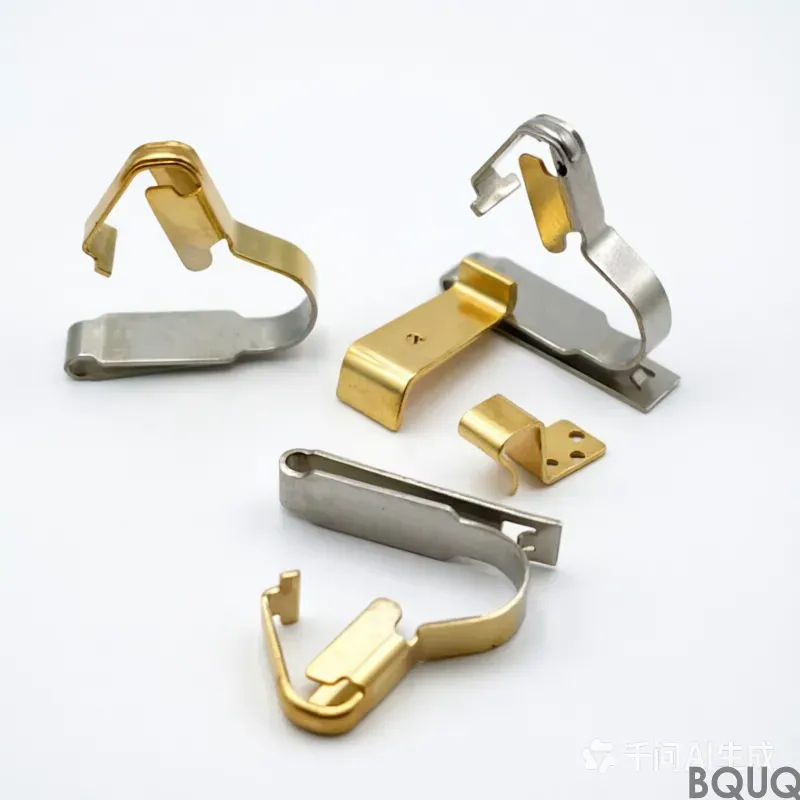
5G连接器冲压如何满足电信精密需求?
Aug 27,2026

5G连接器冲压如何满足电信精密需求?

直接答案是:5G连接器冲压通过±0.01毫米的超高公差、专用高导电铜合金,以及每分钟高达600次冲程的级进模技术,满足电信级精度要求。这种制造工艺能够提供毫米波(mmWave)频段所需的一致性和大批量生产能力,因为在毫米波频段,信号完整性直接取决于尺寸精度和表面光洁度。对于像BQUQ这样拥有20年经验的专业工厂来说,掌握这一细分领域意味着将材料科学与微米级模具控制相结合,每年生产数十亿个互连组件。

为什么精度对5G连接器冲压至关重要?

从4G到5G的转变引入了从3.5 GHz到39 GHz的工作频率,部分毫米波频段甚至达到60 GHz。在这些频率下,波长缩短至5毫米到8.6毫米之间,这意味着冲压连接器上的任何尺寸偏差都会导致阻抗失配、信号反射和插入损耗。在28 GHz频率下,公差为±0.05毫米的冲压触点可能导致电压驻波比(VSWR)劣化高达1.5:1,这对于基站天线和小型基站回传模块来说是不可接受的。

5G连接器冲压的精度不仅关乎最终零件的尺寸,还关乎冲压过程的一致性。华为、爱立信和诺基亚等电信OEM厂商要求关键尺寸的Cpk(过程能力指数)达到1.67或更高,这意味着每百万个零件中仅允许0.57个超出规格范围。这迫使冲压厂商实时控制回弹、材料厚度变化和模具磨损,通常使用模内传感器和带反馈回路的伺服驱动冲床,每5毫秒调整一次滑块位置。
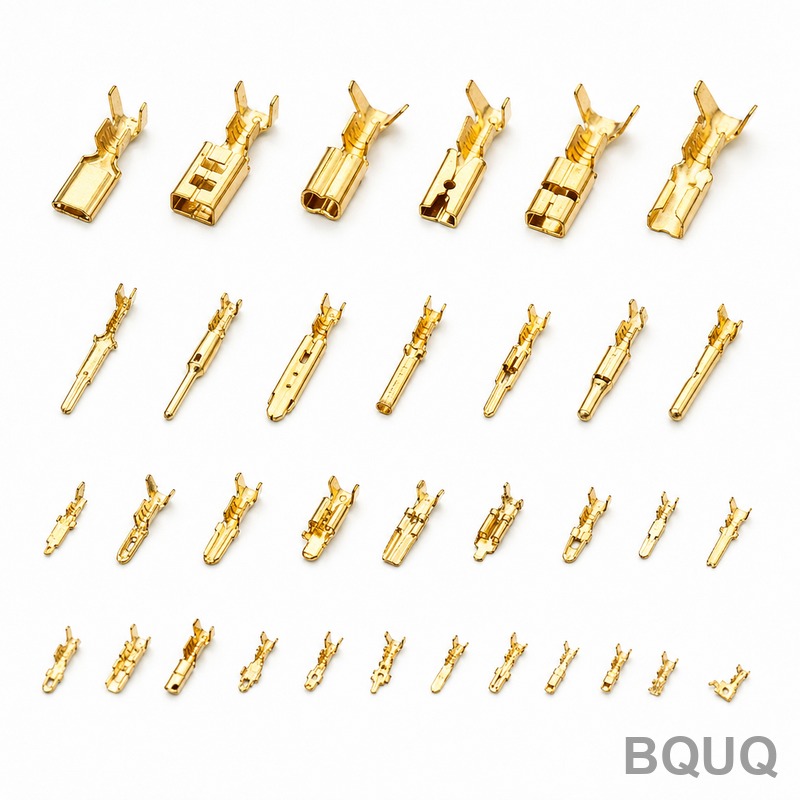
5G连接器冲压如何满足电信精密需求?

5G冲压连接器使用哪些材料等级?

材料的选择直接影响5G连接器的电气性能和机械耐久性。最常见的基材是铍铜(C17200)、磷青铜(C52100)和高性能黄铜(C26000),每种材料根据具体应用需求进行选择。

铍铜是板对板和射频连接器中弹簧触点的首选材料,因为它在反复挠曲后仍能保持弹性模量(131 GPa),在高达150°C的温度下抵抗应力松弛。对于高频信号引脚,磷青铜在导电率(15% IACS)和成形性之间提供了良好的平衡,而黄铜则用于对导电率要求较低的低成本屏蔽罩和接地夹。一个关键规格是回火状态:对于5G应用,我们通常指定C17200半硬(HH)回火状态,抗拉强度为620-790 MPa,硬度为HV 300-360。

电镀体系同样至关重要。对于暴露在室外环境中的5G连接器,我们建议在接触区域先镀1.27-2.54 µm的镍底层,再镀0.76-1.52 µm的金。这可确保接触电阻低于10 mΩ,并防止会降低高频性能的金属间化合物生长。对于成本敏感的内部连接器,在配合表面选择性镀银,最小厚度为2.5 µm,可在6 GHz以下提供足够的性能。

级进模设计如何影响信号完整性?

级进模设计是5G连接器冲压的支柱,它通过20到40个工位在一次冲程中将金属带材转换为成品连接器。每个工位执行特定操作:导正、压印、弯曲、成形和切断。工位之间的距离称为送料步距,通常为20毫米到50毫米,模具必须在整个工作区域保持0.005毫米的平面度,以避免产生导致微裂纹的应力集中。

信号完整性的关键因素是弯曲半径的控制。对于5G连接器,内弯曲半径不得小于材料厚度的0.5倍,以防止晶粒结构断裂导致电阻增加。对于0.2毫米厚的铍铜带材,最小弯曲半径为0.1毫米,我们使用线切割EDM(电火花加工)模具镶件,表面光洁度为Ra 0.2 µm,将该尺寸控制在±0.005毫米以内。

另一个关键参数是切断边缘的毛刺高度。信号触点上超过0.03毫米的毛刺会产生尖锐点,集中电场,在高功率水平下导致电晕放电和被动互调(PIM)。为缓解这一问题,我们在最终切断时采用精冲技术,实现100%材料厚度的光亮带和低于0.01毫米的毛刺高度。模具采用粉末冶金高速钢(如ASP 2030)制造,硬度为HRC 64-66,并涂覆TiAlN(氮化铝钛)涂层,使刀具寿命在两次刃磨之间超过200万次冲程。
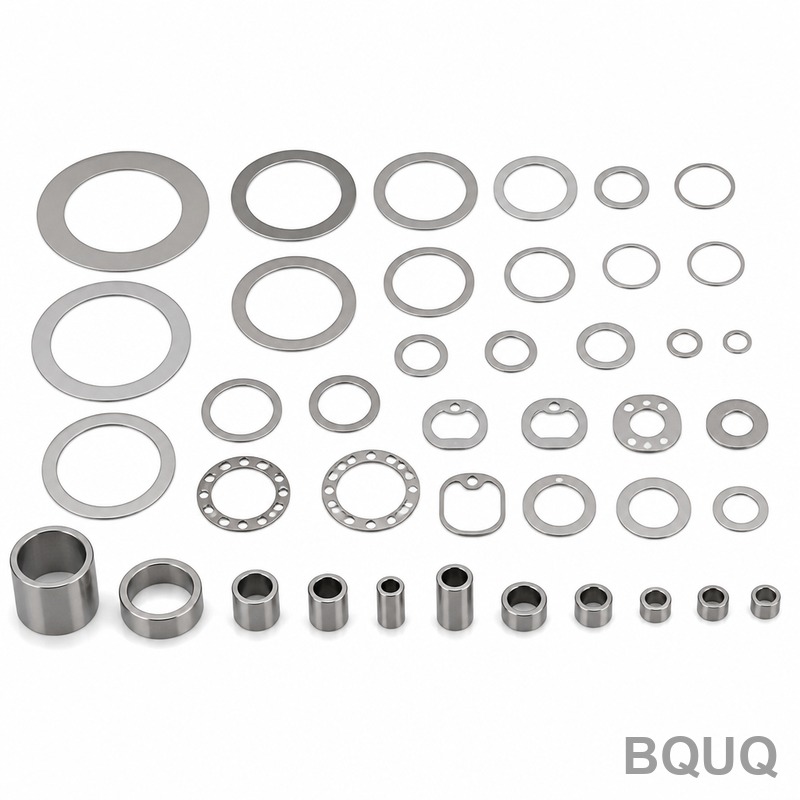
5G连接器冲压如何满足电信精密需求?

生产中可实现哪些公差?

在大批量生产中,5G连接器冲压可以持续保持比一般冲压严格5到10倍的公差。对于关键射频尺寸,我们实现±0.01毫米的公差,而非关键安装特征可控制在±0.05毫米。冲压件的平面度,特别是对于表面贴装(SMT)连接器,在整个封装范围内保持在0.02毫米以内。

下表总结了5G连接器冲压与标准冲压工艺相比的典型可实现公差。

参数5G冲压关键5G冲压一般标准冲压
尺寸公差(毫米)±0.01±0.03±0.10
孔位公差(毫米)±0.015±0.05±0.15
毛刺高度(毫米)最大0.01最大0.03最大0.10
平面度(毫米/25毫米)0.020.050.15
表面粗糙度(Ra µm)0.40.81.6
弯曲角度精度(度)±0.5±1.0±2.0
关键尺寸Cpk1.67+1.33+1.00

要实现这些公差,冲压机必须是高精度伺服冲床,刚性至少为每毫米挠度15吨。我们使用AIDA或Bruderer冲床,容量为80至250吨,5G零件以每分钟100至400冲程(spm)的速度运行,而较简单的组件可达600 spm。材料带材通过精度为±0.005毫米的伺服滚轮送料器送入,确保导正孔与模具工位完美对齐。

何时应选择冲压而非CNC加工来制造5G零件?

为5G连接器组件选择冲压还是CNC加工,取决于产量、几何形状和单件成本。当年产量超过100万件时,冲压是唯一经济可行的选择,这对于大众市场的5G智能手机和基站天线阵列来说很典型。级进模的模具投资在15,000至80,000美元之间,但单件成本降至0.02至0.15美元,具体取决于材料和复杂度。

CNC加工应保留用于原型、小批量生产(每年低于50,000件)或无法在模具中成形的几何形状,如内螺纹或倒扣。对于简单的射频接触引脚,CNC加工件的成本可能为每件1.50美元,而冲压件在大批量生产时每件成本为0.05美元。然而,级进模的交货期为6至10周,而CNC加工可在5至7天内交付零件。

混合方法通常是最实用的:使用CNC加工进行初始现场试验和系统集成,然后在设计冻结且产量提升后过渡到冲压。在BQUQ,我们建议采用这种路径,以避免在早期设计迭代阶段产生模具修改费用,每次工程变更单(ECO)可能为模具预算增加2,000至5,000美元。
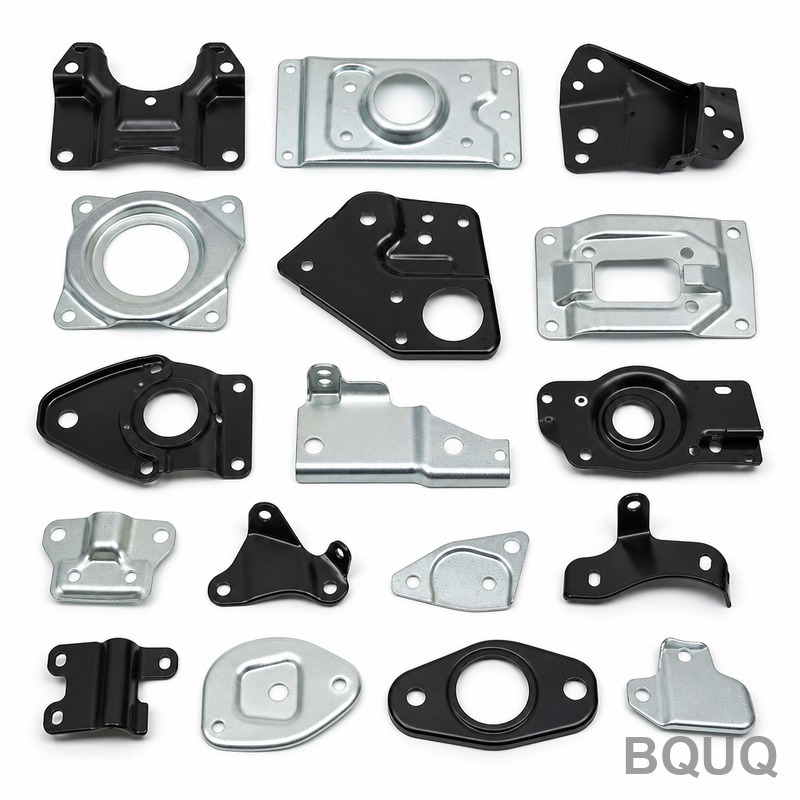
5G连接器冲压如何满足电信精密需求?

热管理如何影响冲压连接器设计?

5G基站会产生大量热量,功率放大器(PA)的结温高达125°C。冲压连接器必须在-40°C至+105°C的温度范围内保持电气接触和机械完整性,适用于室外设备。铜合金(17 ppm/°C)和PCB(FR4为14 ppm/°C)之间的热膨胀系数不同,会在焊点处产生应力,可能导致微裂纹。

为管理这一问题,我们设计带有内置应力释放结构的冲压连接器,例如S形梁触点,可吸收差异膨胀而不会损失法向力。接触法向力必须在整个温度范围内保持在50至150克力(gf)之间。低于50 gf时,由于薄膜形成,接触电阻呈指数增长;高于150 gf时,配合力对于多次插拔循环来说过高。

材料回火状态也起着作用。对于85°C以上的应用,我们指定使用铣削硬化状态的铍铜(如C17200 TH04),因为这种回火状态提供最高的抗应力松弛性能。在加速寿命测试中,铣削硬化触点在150°C下经过1,000小时后仍能保持其初始法向力的90%,而半硬回火状态仅能保持70%。这一差异对于使用寿命为15年的5G设备至关重要。

冲压连接器能否处理高频毫米波信号?

可以,冲压连接器可以处理毫米波频率,但需要特别注意冲压金属板与PCB走线之间的过渡区域。在28 GHz频率下,铜的趋肤深度约为0.39 µm,这意味着信号仅在导体表面传播。因此,冲压件的表面光洁度,特别是接触面,必须优于Ra 0.4 µm,以最小化导体损耗。

冲压触点的几何形状还必须模拟共面波导(CPW)结构,以保持50欧姆的受控阻抗。信号走线的宽度和与接地平面的间隙必须控制在±0.02毫米以内,以将阻抗变化保持在5%以下。我们的精密冲压工艺可以实现这一点,但需要模具设计考虑材料的自然回弹,对于90度弯曲,回弹可达2度。

对于最高频段(39 GHz及以上),我们建议使用全半径尖端(如0.05毫米半径)的冲压触点,以避免辐射能量的尖锐边缘。此外,配合界面必须具有至少0.5毫米的擦拭长度,以穿透任何表面氧化物并确保清洁的金属接触。我们在BQUQ的测试表明,设计得当的冲压连接器在28 GHz频率下每个连接器的插入损耗低于0.1 dB,回波损耗优于-20 dB,满足3GPP Release 15规范的要求。

常见问题解答

5G连接器冲压模具的典型交货期是多久?

5G连接器级进模的交货期为6至10周,具体取决于工位数量和几何形状的复杂度。具有15个工位的简单两端子连接器大约需要6周,而用于多引脚射频连接器的复杂40工位模具可能需要10周。我们建议在最终CAD冻结前至少2周开始模具设计评审,以便及早发现潜在的成形性问题。

5G连接器冲压模具的成本是多少?

5G连接器的级进模成本在15,000至80,000美元之间,20工位模具的平均成本约为35,000美元。成本由工位数量、模具钢类型(粉末冶金与传统)以及所需公差决定。例如,增加精冲能力或模内传感会使成本增加20%至30%。

哪种材料最适合高温5G应用?

铣削硬化状态(TH04)的铍铜C17200是高温5G应用的最佳材料,因为它具有优异的抗应力松弛性能和105 W/m·K的热导率。它在150°C下经过1,000小时后仍能保持90%的初始接触力。钛铜(C19900)等替代材料提供更高的强度,但成本溢价20%。

你们能冲压0.1毫米壁厚的连接器吗?

可以,我们可以冲压壁厚低至0.05毫米的连接器,但5G射频连接器的实际最小值为0.1毫米。低于此厚度,材料在级进模中难以处理,撕裂风险显著增加。对于非常薄的壁,我们建议使用高延展性材料,如软回火状态的磷青铜,并将冲压速度降至150 spm以最小化振动。

使用哪些检验方法来验证5G冲压质量?

我们对5G冲压连接器采用在线和离线相结合的检验方法。在线方面,我们使用分辨率为0.1 µm的激光测微计对关键尺寸进行100%全检。离线方面,我们使用分辨率为0.5 µm的三坐标测量机(CMM)进行全尺寸分析,并使用扫描电子显微镜(SEM)进行表面缺陷检测。电气测试包括使用网络分析仪按抽样方式测量高达67 GHz的S参数。

如何控制5G连接器冲压中的回弹?

回弹通过模具中的过弯、压印和底部整形技术的组合来控制。我们在模具中设计1至3度的过弯角度,然后使用压印工位在弯曲点压缩材料,这将回弹降至接近零。对于关键弯曲角度,我们还增加底部整形工位,施加额外压力以设定最终几何形状。

5G冲压连接器的最小起订量是多少?

5G冲压连接器的最小起订量(MOQ)通常为每个料号100,000件。然而,对于初始认证批次,我们可以使用临时模具或简化模具提供10,000至25,000件。MOQ主要由模具成本的分摊和冲床的设置时间驱动,每次设置约需2小时。

5G连接器冲压的精度要求通过先进材料、高公差级进模和严格工艺控制的组合来满足。在BQUQ,我们通过20年的制造经验不断完善这些技术,使我们能够交付在高达67 GHz频率下可靠运行的连接器。如果您正在设计5G模块或基站,欢迎将您的图纸发送给我们进行可行性评审,并在12小时内获得有竞争力的报价。请联系sc@bquq.com或通过WhatsApp +86 13713157787与我们沟通,或访问我们的网站www.bquq.com了解更多关于我们精密冲压能力的信息。
相关阅读


联系我们报价
获取报价
我们使用cookie来改善您的在线体验。继续浏览本网站即表示您同意我们使用cookie

Cookies

Please read our Terms and Conditions and this Policy before accessing or using our Services. If you cannot agree with this Policy or the Terms and Conditions, please do not access or use our Services. If you are located in a jurisdiction outside the European Economic Area, by using our Services, you accept the Terms and Conditions and accept our privacy practices described in this Policy.
We may modify this Policy at any time, without prior notice, and changes may apply to any Personal Information we already hold about you, as well as any new Personal Information collected after the Policy is modified. If we make changes, we will notify you by revising the date at the top of this Policy. We will provide you with advanced notice if we make any material changes to how we collect, use or disclose your Personal Information that impact your rights under this Policy. If you are located in a jurisdiction other than the European Economic Area, the United Kingdom or Switzerland (collectively “European Countries”), your continued access or use of our Services after receiving the notice of changes, constitutes your acknowledgement that you accept the updated Policy. In addition, we may provide you with real time disclosures or additional information about the Personal Information handling practices of specific parts of our Services. Such notices may supplement this Policy or provide you with additional choices about how we process your Personal Information.


Cookies

Cookies are small text files stored on your device when you access most Websites on the internet or open certain emails. Among other things, Cookies allow a Website to recognize your device and remember if you've been to the Website before. Examples of information collected by Cookies include your browser type and the address of the Website from which you arrived at our Website as well as IP address and clickstream behavior (that is the pages you view and the links you click).We use the term cookie to refer to Cookies and technologies that perform a similar function to Cookies (e.g., tags, pixels, web beacons, etc.). Cookies can be read by the originating Website on each subsequent visit and by any other Website that recognizes the cookie. The Website uses Cookies in order to make the Website easier to use, to support a better user experience, including the provision of information and functionality to you, as well as to provide us with information about how the Website is used so that we can make sure it is as up to date, relevant, and error free as we can. Cookies on the Website We use Cookies to personalize your experience when you visit the Site, uniquely identify your computer for security purposes, and enable us and our third-party service providers to serve ads on our behalf across the internet.

We classify Cookies in the following categories:
 ●  Strictly Necessary Cookies
 ●  Performance Cookies
 ●  Functional Cookies
 ●  Targeting Cookies


Cookie List
A cookie is a small piece of data (text file) that a website – when visited by a user – asks your browser to store on your device in order to remember information about you, such as your language preference or login information. Those cookies are set by us and called first-party cookies. We also use third-party cookies – which are cookies from a domain different than the domain of the website you are visiting – for our advertising and marketing efforts. More specifically, we use cookies and other tracking technologies for the following purposes:

Strictly Necessary Cookies
These cookies are necessary for the website to function and cannot be switched off in our systems. They are usually only set in response to actions made by you which amount to a request for services, such as setting your privacy preferences, logging in or filling in forms. You can set your browser to block or alert you about these cookies, but some parts of the site will not then work. These cookies do not store any personally identifiable information.

Functional Cookies
These cookies enable the website to provide enhanced functionality and personalisation. They may be set by us or by third party providers whose services we have added to our pages. If you do not allow these cookies then some or all of these services may not function properly.

Performance Cookies
These cookies allow us to count visits and traffic sources so we can measure and improve the performance of our site. They help us to know which pages are the most and least popular and see how visitors move around the site. All information these cookies collect is aggregated and therefore anonymous. If you do not allow these cookies we will not know when you have visited our site, and will not be able to monitor its performance.

Targeting Cookies
These cookies may be set through our site by our advertising partners. They may be used by those companies to build a profile of your interests and show you relevant adverts on other sites. They do not store directly personal information, but are based on uniquely identifying your browser and internet device. If you do not allow these cookies, you will experience less targeted advertising.

How To Turn Off Cookies
You can choose to restrict or block Cookies through your browser settings at any time. Please note that certain Cookies may be set as soon as you visit the Website, but you can remove them using your browser settings. However, please be aware that restricting or blocking Cookies set on the Website may impact the functionality or performance of the Website or prevent you from using certain services provided through the Website. It will also affect our ability to update the Website to cater for user preferences and improve performance. Cookies within Mobile Applications

We only use Strictly Necessary Cookies on our mobile applications. These Cookies are critical to the functionality of our applications, so if you block or delete these Cookies you may not be able to use the application. These Cookies are not shared with any other application on your mobile device. We never use the Cookies from the mobile application to store personal information about you.

If you have questions or concerns regarding any information in this Privacy Policy, please contact us by email at . You can also contact us via our customer service at our Site.