Material Certificates: MTRs and Traceability for Imported Parts
A material certificate — the mill test report or MTR — is the document that proves what your parts are actually made of, and the version that matters for precision work is a certificate with a heat number, issued by the mill or an independent inspector, tracing back to the actual melt. For imported parts, the rule is simple: if the material grade matters to your application, the certificate is a deliverable of the order, not a favor the factory does for you.
Every year, parts fail because "stainless" was not the grade specified, or "spring steel" had the wrong carbon content for the load. Material certificates exist to prevent exactly that. This guide covers the certificate types you will meet in China trade, what each one proves, and how to build traceability into your orders.
What an MTR Actually Contains
A mill test report is issued by the steel or alloy producer (or an independent inspector) and documents one production batch of material. The useful fields go beyond the grade name — the grade on a label is a claim; the chemistry on a certificate is evidence.
| MTR field | What it tells you | Why it matters |
|---|---|---|
| Heat number / batch ID | Identifies the actual melt or lot | The key to traceability — ties cert to physical material |
| Chemical composition | Element percentages per the grade standard | Detects substituted or off-grade material |
| Mechanical properties | Yield, tensile, hardness, elongation | Confirms the material was processed to spec |
| Standard and grade | e.g. ASTM A276 304, EN 1.4301, GB/T 1220 | Matches your drawing's material callout |
| Processing history | Hot rolled, cold drawn, annealed, tempered | Affects machinability and final properties |
| Date and issuer | Mill name, date, inspector signature | Verifies the document's origin |
Cross-reference rule: the certificate is only as good as its link to your material. In a factory with real traceability, incoming material is tagged with the heat number, and that tag follows the material to the machine and into the batch records — so a part can be traced back to its melt. Without the tag, a stack of certificates proves only that the factory has certificates.
EN 10204 Certificate Types: 2.2, 3.1, 3.2
The European EN 10204 standard classifies inspection documents, and these type numbers have become the working vocabulary for material certification worldwide, including in China.
| Type | Issued by | What it proves | Typical use |
|---|---|---|---|
| EN 10204 2.2 | Factory, non-specific inspection | Material conforms to order, factory's own testing | General commercial parts, low risk |
| EN 10204 3.1 | Factory, with independent statement of conformity | Material conforms, testing by the mill/factory which is independent of production | Most engineering parts, food/medical/structural |
| EN 10204 3.2 | Factory + independent third-party inspector | 3.1 evidence plus witness by an external inspector | High-risk, regulated, or customer-mandated |
Practical translation: for a standard precision hardware part, a 3.1 certificate with heat number is the working norm. 2.2 is acceptable for non-critical material. 3.2 is for when your customer, your standard, or your risk assessment demands an outside witness. Ask for 3.1 as your default and it will be priced accordingly; many China factories quote it in as standard for stainless and alloy grades above common steel.
What to Require Per Material Type
Different materials deserve different certificate strictness. The table below is a practical default; your drawing and application override it.
| Material | Certificate to request | Extra checks worth doing |
|---|---|---|
| Aluminum 6061/6063 | Mill cert or supplier cert with temper (T6) | Hardness spot check; temper affects machined finish |
| Stainless 303/304/316 | EN 10204 3.1 with heat number | Chemistry spot verification via lab if critical |
| Carbon/alloy steel | Mill cert with heat number | Hardness and tensile on cert vs. application |
| Spring wire (music wire, chrome silicon, stainless) | Wire mill cert with heat number and coil ID | Wire diameter tolerance; decarburization for heat-treated springs |
| Copper/brass/phosphor bronze | Mill cert with chemistry | Conductivity or hardness if electrical function |
| Titanium and high-temp alloys | 3.1 minimum, often 3.2 | Full chemical verification; counterfeit risk is real on premium alloys |
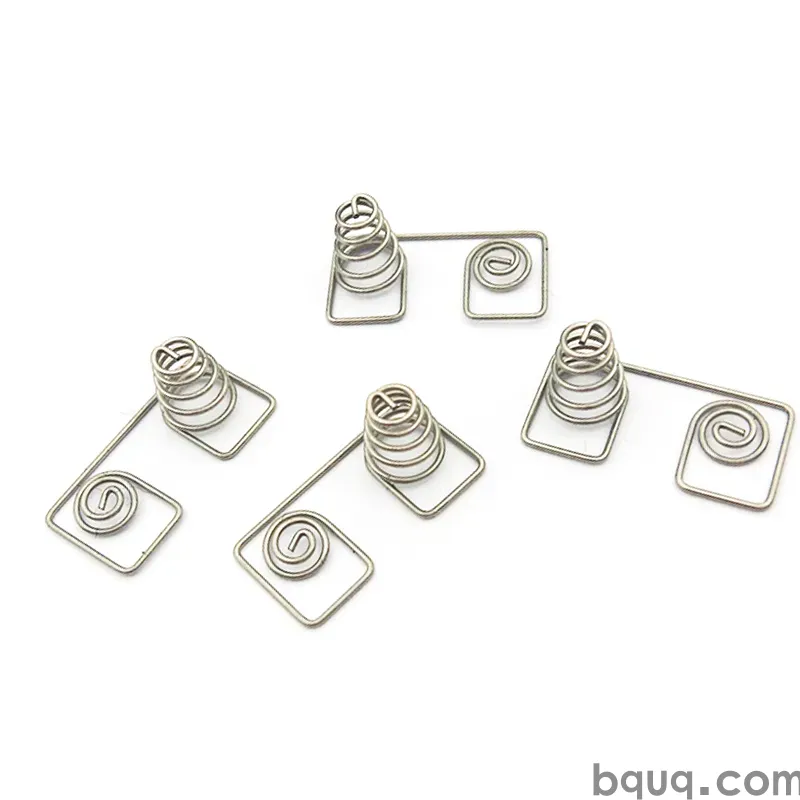
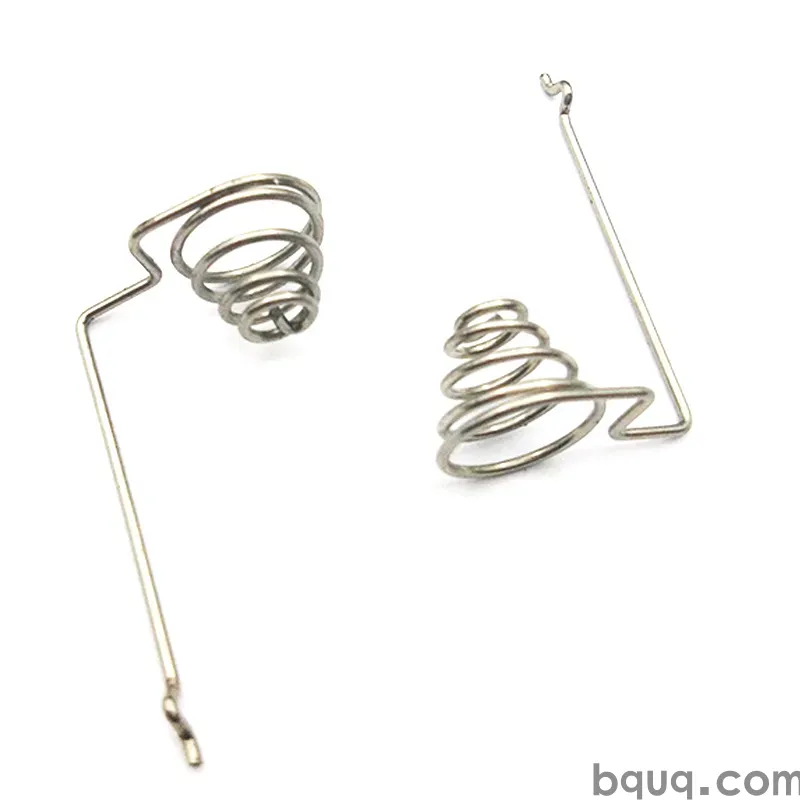
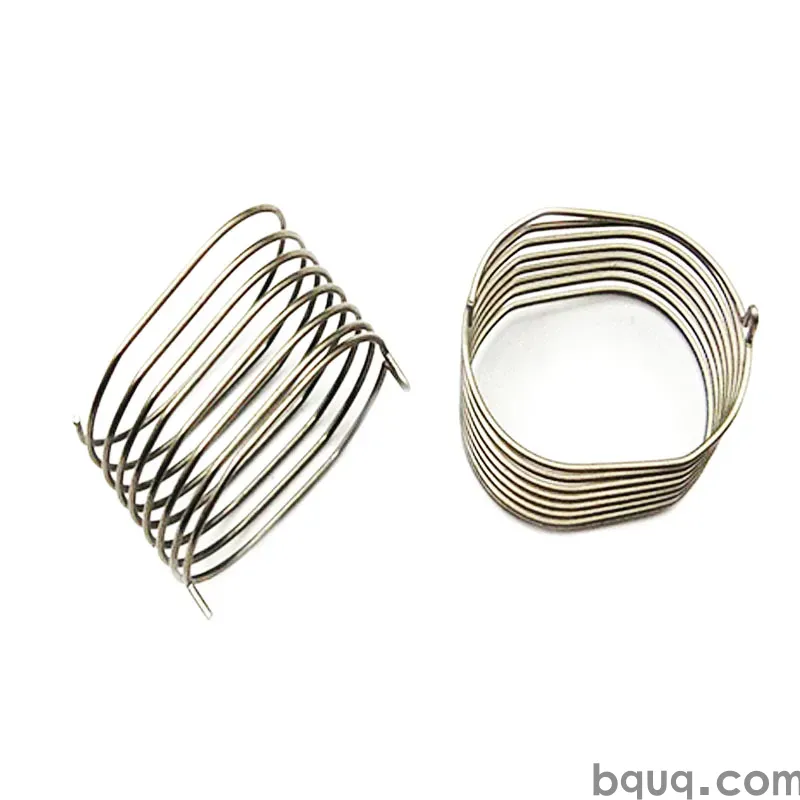
For springs specifically, the wire certificate is the upstream document: spring properties are set by wire grade, diameter tolerance and processing, so a spring factory should be able to show the wire cert behind each heat-treatment batch. Our custom spring line operates this way — wire certs are kept with the batch records.
Traceability in an ISO 9001 Factory: What to Look For
Traceability is a system, not a document. In an ISO 9001-based quality system it usually works like this: incoming material is inspected against the PO and its certificate; material is tagged or segregated by grade and heat; batch records link the material tag to the production order; the final inspection report references the batch. When a customer asks "what is this part made of, and prove it", the factory walks from part → batch record → material tag → certificate in minutes. If that walk takes days or cannot happen, the traceability is fictional.
| Traceability evidence | What it looks like in a working factory |
|---|---|
| Incoming inspection records | Material checked against cert and PO on arrival |
| Material identification | Tags, color codes, or segregated racks by grade/heat |
| Batch/lot records | Production order linked to material tag |
| Final report linkage | Inspection report references material and batch IDs |
| Certificate retention | Mill certs archived and retrievable per order |
This is exactly what a remote factory audit should probe: ask to see the walk from a finished part to its material certificate, live. It takes ten minutes and it tells you whether the system is real.
Getting Certificates Right in Your Order
Certificates are deliverables. Write them into the PO the same way you write tolerances: state the certificate type (e.g., EN 10204 3.1), the language of issue, whether it must arrive with the parts or can follow by email, and what happens if it is missing or wrong — a batch without its certificate should be treated as unverified material, held until the document arrives. Combine this with your AQL inspection plan and the pre-shipment inspection guide, because certificate checks belong on the inspection checklist: verify the heat number on the cert matches the material tag on the actual parts, not just that a PDF exists.
One honest note on limits: a certificate proves what the mill produced, and the factory's records prove that material went into your parts. Neither proves the part's final properties after machining or heat treatment — that is what hardness testing, tensile testing or batch testing covers. For critical applications, pair the certificate with the appropriate part-level test rather than treating the MTR as the whole story.
A Factory That Keeps the Paperwork Straight
As a comparison point, here is the traceability practice at BQUQ, stated so you can hold us to it: we are ISO 9001 certified; incoming material is checked against the PO and its certificate at receipt, tagged by grade, and stored segregated; batch records link production orders to material tags; and the material certificate for each order is available on request and delivered with the batch documentation. Our standard quote includes material grade confirmation on the drawing review — if a drawing says 304 and the application really needs 316, we flag it before we cut metal, not after. Mill certificates for the stainless, aluminum, steel and spring wire we process are retained per order. If material traceability is critical for your program, say so in the inquiry and we will confirm the certificate type (3.1 by default) in the quotation — the same way you should require it from any factory you quote against. Our profile documents the quality system, and a drawing sent to sc@bquq.com or WhatsApp +86 13713157787 will come back with a quote and our material confirmation within 12 working hours.
Email sc@bquq.com or WhatsApp +86 137 1315 7787 with your PDF/DXF/STEP file. An engineer reviews it and replies with price, lead time and DFM notes on working days.
Frequently Asked Questions
Q: What is the difference between an MTR and a certificate of conformance?
A certificate of conformance (CoC) is the factory's own statement that material meets the order — a claim. An MTR / EN 10204 3.1 document carries actual chemistry and mechanical test data with a heat number — evidence. For critical parts, ask for the latter.
Q: Do I need a material certificate for every order?
For critical materials and applications, yes — make it a PO deliverable. For cosmetic or non-structural parts in common grades, a CoC may suffice. Decide by risk: what fails, and what does it cost, if the grade is wrong?
Q: Can a Chinese factory fake a material certificate?
Any document can be forged, which is why verification matters: check the issuer, the heat number format, and ideally verify chemistry with an independent lab test on premium alloys. Reputable factories have no reason to fake certs — the risk concentrates in traders and unknown mills.
Q: What is a heat number and why does it matter?
A heat number identifies the specific melt or production batch of the material. It is the link between the certificate and the physical metal. Without it, a certificate cannot be tied to your parts, and traceability collapses.
Q: Should the certificate arrive with the goods or by email?
Either works if it is a PO deliverable with a defined deadline. Email is faster for your records; a paper copy with the shipment is traditional for customs and downstream customers. State both in the order and verify the heat numbers match at inspection.
Authored by the BQUQ Engineering Team. BQUQ is an ISO9001-certified source factory in Dongguan, China, running CNC machining, metal stamping, custom springs, heat sink and collet lines under one roof. Send drawings to sc@bquq.com or WhatsApp +86 13713157787 for a quote within 12 working hours. www.bquq.com