Multi-Process Parts: When One Factory Beats Four Suppliers
A multi-process part — say, a machined housing with a stamped contact, a spring, and a heat sink feature — is where sourcing strategy changes: splitting it across four specialist factories multiplies logistics, tolerance risk and quality interfaces, while one factory running the processes under one roof removes the handoffs entirely. The break-even is not at high volume; it is the moment your part touches a second process.
Specialist factories quote lower per-process prices, and that is a real number. But the part does not arrive as four processes — it arrives as one assembly, and every interface between the four suppliers is a place where cost, tolerance and schedule leak. This guide lays out the math honestly: when single-factory sourcing wins, when specialists still win, and how to decide with numbers rather than convenience.
Where Multi-Process Cost Actually Hides
Compare like with like: the specialist's four quotes sum to a number, but the delivered cost includes what happens between the quotes. Each handoff carries freight or courier cost, packaging, queue time, a quality interface (who owns a defect found at assembly?), and tolerance risk — the stamped bracket's flatness interacts with the machined pocket it sits in, and nobody owns that interaction except you.
| Cost/risk element | Four separate suppliers | One multi-process factory |
|---|---|---|
| Per-process unit price | Lowest (specialist efficiency) | Slightly higher per process, typically |
| Freight/handling between processes | 4–6 moves, each with cost and queue | Zero — internal transfer |
| Queue time between processes | Days per move, schedule risk at each | Hours, coordinated schedule |
| Tolerance stacking ownership | You own the interfaces | Factory owns the assembly fit |
| Defect responsibility | Argued across PO boundaries | One contract, one quality system |
| Communication overhead | Four contacts, four revision systems | One engineering thread |
| Total delivered cost | Often 10–30% above the sum of quotes | Close to the single quote |
The takeaway: the specialist quotes are process costs; the delivered cost includes interface costs that no specialist quotes you. When interfaces are trivial — four independent parts that never touch — the specialists win. When parts interact, the interface cost is real money, and it belongs in the comparison.
The Tolerance Question: Who Owns the Fit?
The deepest argument for one factory is dimensional: fit is an interaction. A spring's free length and rate interact with the machined pocket depth; a stamped contact's formed height interacts with the housing's slot; a heat sink's flatness interacts with the device mounting face. When four suppliers each hold their own tolerances, the stack-up at the interfaces is governed by statistics and luck — unless you, the buyer, do the stack-up analysis and allocate the tolerances, which is engineering work you are doing for free.
| Interactive feature | Single-factory advantage |
|---|---|
| Spring seat depth vs. spring free length | One engineer fits them against each other |
| Stamped contact height vs. machined slot | Assembly trial at first article, not after shipment |
| Heat sink flatness vs. device contact | Surface control owned by one process chain |
| Press-fit interfaces | Fit tolerance allocated inside one quality system |
A factory running both processes can assemble a trial unit at the first-article stage and verify the fit before production — something no combination of separate suppliers can do without you coordinating the samples. This is why the drawing-to-approved-sample workflow is where multi-process value is captured: the sample approval covers the assembly, not just the parts.
When Specialists Still Win
Honesty requires the other side of the ledger. Single-factory sourcing loses in three situations: very high volume of a single process (a million stamped terminals a year belongs at a stamping specialist running high-speed presses); exotic processes a generalist does not run well (special plating, exotic alloys, fine blanking at scale); and geographic mismatch (your machined part is in Dongguan but your casting is only economic in Ningbo — see our hub comparison). The decision rule is about interaction, not ideology: if the parts interact, consolidate; if they are independent, split by process strength and let price decide.
| Situation | Better choice | Why |
|---|---|---|
| Interacting parts, moderate volume | One multi-process factory | Interface cost and fit ownership dominate |
| One process dominates, huge volume | Specialist | High-speed process efficiency wins at scale |
| Parts are fully independent | Split suppliers | No interface cost to pay for |
| Exotic process needed (fine blanking, special plating) | Specialist for that process | Generalists cannot match specialist process control |
| Prototype-to-mid volume, mixed processes | One factory | Engineering and iteration speed beat price |
The Engineering Argument: One Drawing, One Conversation
Multi-process parts concentrate engineering decisions. When one factory holds the whole part, the DFM conversation happens across processes: the engineer can suggest moving a tolerance from the stamped element to the machined one because it is cheaper there, or adjusting a spring seat depth to use a stock wire diameter. Four suppliers cannot have that conversation — each optimizes its own process against your drawing, and the interfaces suffer.
The practical consequence is visible in quoting behavior. A factory that runs multiple lines asks different questions: not only "can we hold this tolerance" but "how does this assemble, and which features actually matter to the fit?" That is the question pattern we described in our guide to identifying capable manufacturers, and it is a stronger signal on multi-process parts than on single-process ones.
The Single-Factory Math, Worked
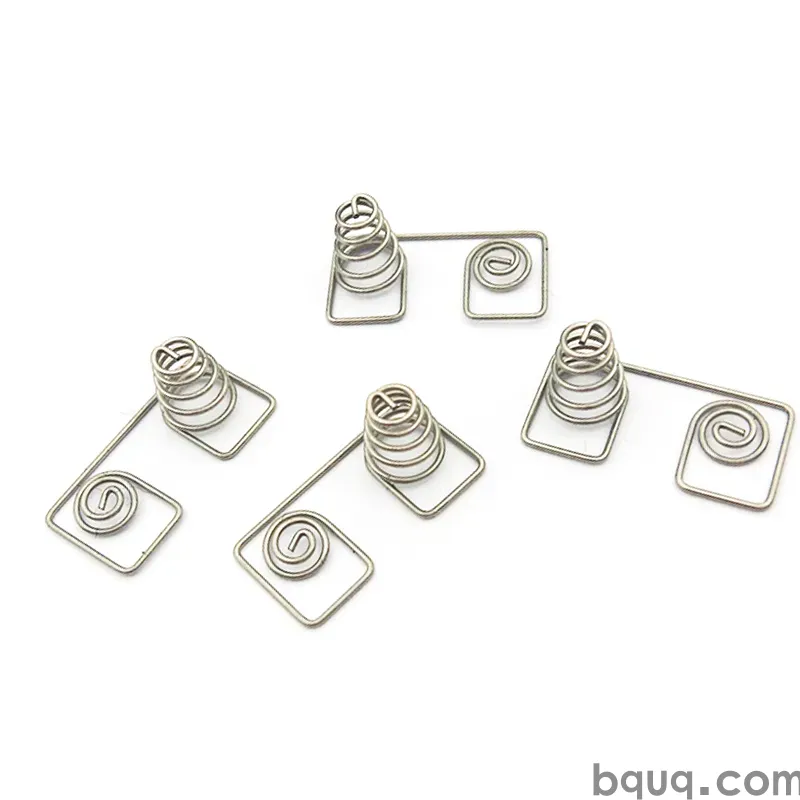
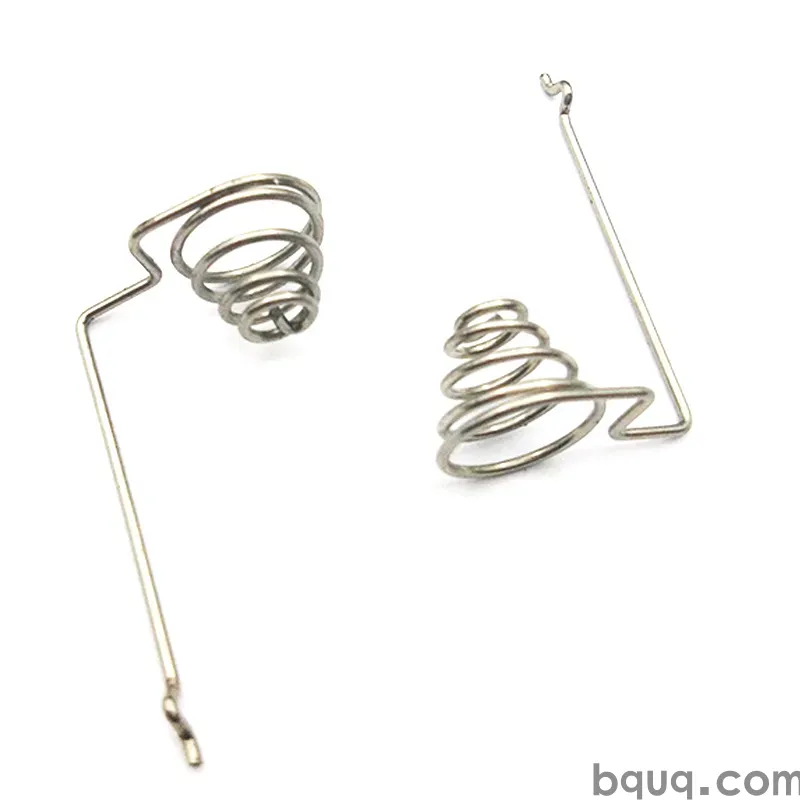
For a concrete scale: a machined aluminum housing with a pressed-in stamped contact and a spring-loaded terminal — the kind of part used across stamped heat sinks, connectors, and small electromechanical assemblies. Specialists quote $4.10 for the machined part, $0.60 for the stamped contact, $0.30 for the spring: $5.00 in process cost. Between them sit three freight moves (roughly $3–6 per move for small express at this scale, and a day of queue each), your engineering time on interface tolerance, and the risk that a defect found at your assembly line starts a three-way blame loop that costs a week. A single factory quotes $5.80 for everything — process price higher by 16% — but delivers one part, one inspection report, one invoice, and one owner of the fit. Most buyers who run this comparison for interacting parts find the single factory is cheaper by the time the first assembly defect would have occurred — and it is certainly cheaper in calendar time.
That is the model BQUQ operates: CNC machining, metal stamping, custom springs and heat sink lines under one roof in Dongguan, so a housing, its stamped contact, its spring and its thermal element can be made, inspected and trial-assembled inside one building with one quality system — and quoted as one number, typically within 12 working hours of receiving the drawing (sc@bquq.com, WhatsApp +86 13713157787). Our CNC turning parts, custom springs and stamped heat sinks pages show the process scope; our profile documents the ISO 9001 system that makes the handoffs auditable. Whether single-factory or split sourcing is right for your part is a calculation, not a preference — and now you have the numbers to run it.
Email sc@bquq.com or WhatsApp +86 137 1315 7787 with your PDF/DXF/STEP file. An engineer reviews it and replies with price, lead time and DFM notes on working days.
Frequently Asked Questions
Q: Isn't it always cheaper to use specialist factories for each process?
Per-process unit price is usually lower with specialists, but multi-process parts pay interface costs — freight, queue time, tolerance stack-up ownership and defect coordination — that no specialist quotes. When parts interact, the single-factory total is often lower. When they are independent, specialists win.
Q: What counts as a "multi-process part"?
Any part or assembly whose function depends on more than one process — a machined housing with a stamped contact, a spring seated in a turned part, a heat sink with stamped clips. The trigger is interaction: if the processes affect each other's fit or function, it is multi-process.
Q: How do I know if tolerance stacking is a real problem for my parts?
Run the stack-up: sum the worst-case or statistical variation of the interacting features across the supplier boundaries. If the assembly fit depends on features from two factories, you own that stack-up. If the interfaces are non-critical, stacking is a non-issue and splitting is fine.
Q: Can one factory really hold quality across CNC, stamping and springs?
Yes, when the processes are mature and one quality system governs them — which is what ISO 9001 certification plus process depth provides. Verify with a trial assembly at first article: the fit and function evidence matters more than any certificate.
Q: At what volume should I switch from one factory to specialists?
When a single process dominates the part and runs at high volume — such as millions of stamped pieces per year — specialist high-speed process economics take over. Below that, interacting parts usually favor consolidation. Re-run the comparison whenever volume changes by an order of magnitude.
Authored by the BQUQ Engineering Team. BQUQ is an ISO9001-certified source factory in Dongguan, China, running CNC machining, metal stamping, custom springs, heat sink and collet lines under one roof. Send drawings to sc@bquq.com or WhatsApp +86 13713157787 for a quote within 12 working hours. www.bquq.com