博客

Micro Springs: Real Manufacturing Limits Below 0.5 mm Wire
Dec 26,2025

Micro Springs: Real Manufacturing Limits Below 0.5 mm Wire

Below 0.5 mm wire, springs stop being scaled-down versions of big springs: real production limits are around 0.05–0.10 mm wire for specialist makers, practical coil ODs from roughly 0.3 mm up, spring index below 3–4 becomes uncoilable, and tolerances that are routine at 2 mm wire become impossible. Plan a micro spring around wire availability, index limits and measurement reality — the drawing that looks fine on paper may not be coilable at all.

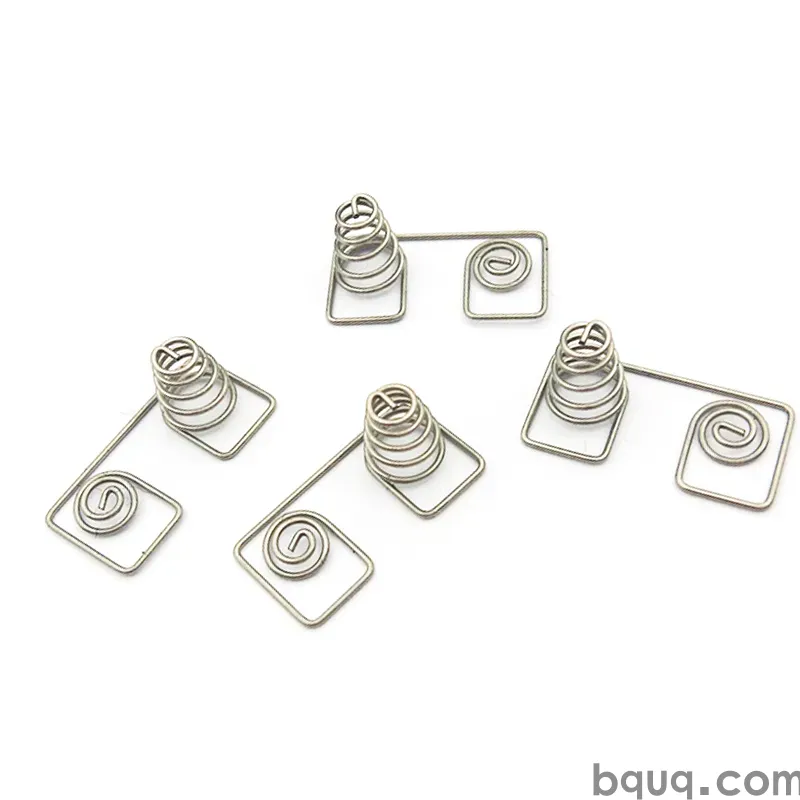
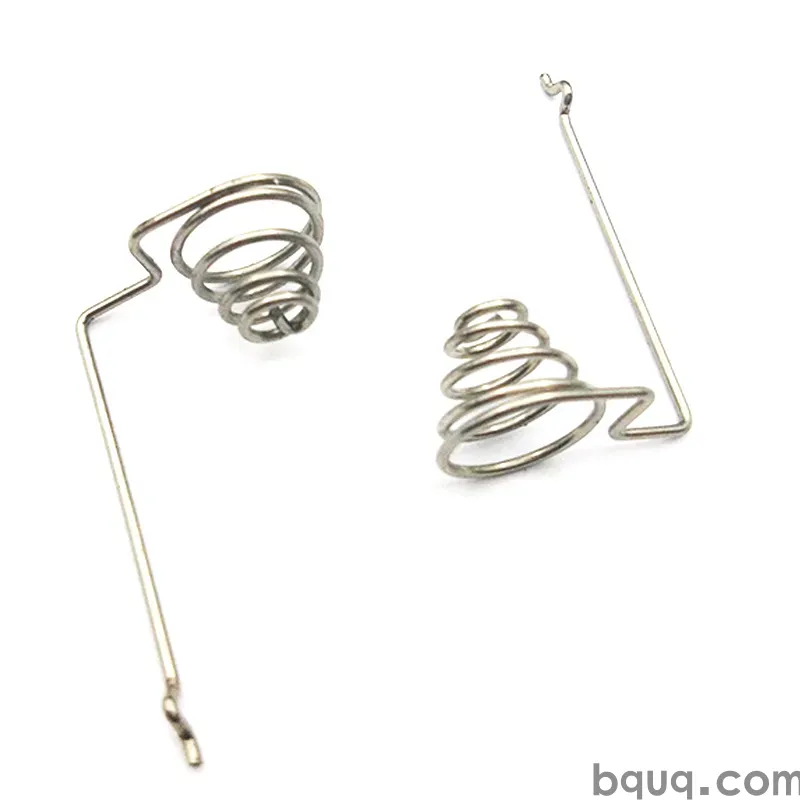
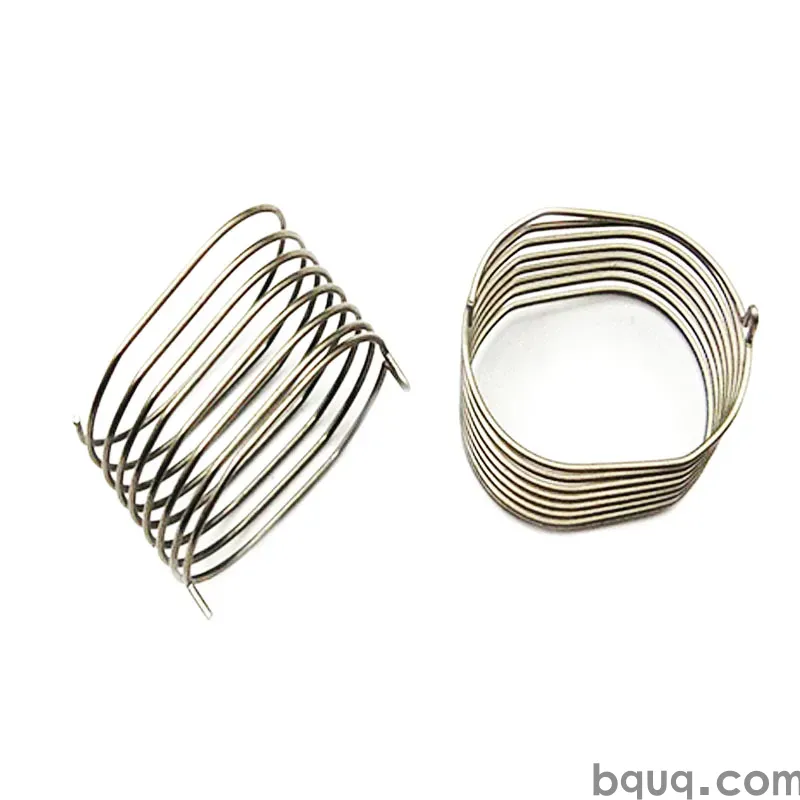
Micro springs power medical devices, micro switches, antenna contacts, pressure sensors and miniature electronics. The engineering is not harder than full-size spring design — it is just governed by different limits. When the wire gets thin, coiling machines, wire tolerances, measurement tools and handling all hit physical walls, and the designer who knows those walls avoids the expensive loop of drawing, quoting, and discovering the part cannot be made.

The Real Manufacturing Limits

The first limit is the wire itself. Drawn wire below about 0.05 mm exists but is expensive, hard to handle and tightly toleranced only in specialist grades; most micro-spring production runs from 0.1 to 0.5 mm wire where supply is normal. The second limit is the spring index — the ratio of mean coil diameter to wire diameter. Below an index of about 3–4, the wire cannot be bent around the arbor without cracking or losing roundness; above an index of about 15–20, the coil becomes so flimsy it buckles sideways and cannot hold its geometry.

ParameterPractical limitTypical production range
Wire diameter~0.05 mm floor0.1–0.5 mm is the comfortable band
Coil OD~0.3 mm floor0.5–5 mm common
Spring index (D/d)3–4 minimum5–12 ideal
Free length~1 mm floor1–30 mm
Number of coils2–3 minimum3–10 typical
Closed/ground endsGrinding impractical below ~0.3 mm wireOpen ends or closed-not-ground below that

Takeaway: below roughly 0.3 mm wire, end grinding stops being practical — you cannot hold a 0.15 mm wire in a grinder fixture — so specify open ends or closed ends without grinding, and accept the load scatter that comes with unground ends. If your design needs flat closed ends, the wire must be thick enough to grind, which pushes the whole spring bigger.

Tolerances Shrink Differently Below 0.5 mm

Tolerance intuition from larger springs misleads at micro scale. Wire diameter tolerance is a percentage of the wire, so a ±1% band on 0.2 mm wire is only ±0.002 mm — tighter than most coilers can hold the coil pitch. Load tolerance, which depends on wire diameter to the fourth power in the rate formula, amplifies any wire variation enormously: a 5% wire variation can move the rate by 20% or more. Meanwhile the free-length tolerance that is easy at 10 mm length becomes proportionally coarse at 3 mm.

DimensionAt 2.0 mm wire (typical)At 0.2 mm wire (micro)Practical note
Wire diameter tolerance±0.01 mm typical±0.002 mm is premiumWire supplier limits dominate
Load at working height±7–10%±10–15% or selectWire variation amplified by 4th power
Free length±2–4%±3–6%Unground ends scatter more
OD control±1–2%±2–3%Coiling machine stability
Force testingRoutineNeeds low-force testerBelow ~1 N, test fixtures interfere

Takeaway: on micro springs, specify a load band you can actually verify and manufacture — typically ±10–15% unless you plan to select springs into bins — and do not call free length tighter than the process holds. The highest-value drawing callout is force at working height with a realistic window, exactly as on larger springs but with the window widened for physics rather than sloppiness.

Materials and Handling: What Micro Springs Are Made Of

The same alloy families appear at micro scale, with a twist: wire-drawing capability and surface quality matter more than the alloy name. A surface scratch that is invisible on 2 mm wire is a large fraction of the cross-section on 0.15 mm wire and will start a fatigue crack quickly. Micro springs therefore favor materials that draw clean and resist corrosion, since plating thin wire is difficult and adds dimension.

MaterialMicro-spring useNotes
Stainless 302/304Most commonCorrosion-safe, draws well, no plating needed
Music wireCheapest, dry productsMust be protected from corrosion
Beryllium copperElectrical contacts, high cyclesConductivity plus spring temper
MP35N / ElgiloyMedical, corrosive, high tempPremium cost, premium performance
Pt-Ir and noble alloysImplantable medicalExtreme cost, specialist only

Takeaway: for most micro-spring products, 302 stainless is the default because it removes the plating problem that is hardest to solve at small scale — a 0.15 mm wire with a 3 µm plating layer has a significant plating fraction and the coating cracks where the wire bends. When conductivity matters, beryllium copper or a gold-flashed stainless is the usual answer; contact and electronic springs follow this logic at any size. Corrosion resistance is not a nice-to-have on micro parts — a pit that removes 20% of a thin wire's section removes 20% of its strength.

Inspection and Measurement: The Hidden Cost

Measuring a micro spring is harder than making it. Force below 1 N needs a low-force load tester with a compliant fixture, because the test tool itself can distort the spring. Dimensions below a few millimetres move out of caliper range into optical measurement — profile projectors or vision systems — and the wire surface quality needs a microscope to check. Every measurement step costs time, which is why micro spring prices per part run far above full-size equivalents even at volume.

CheckToolTypical challenge
OD, length, pitchOptical projector / visionFixturing without distorting
Force at heightLow-force tester (0.01 N class)Fixture friction swamps the reading
Wire surfaceMicroscope inspectionSample-based, not 100%
RateCalculated from force curveShort travel = few data points
Coil count / endsVision or manualFast but operator-dependent

Takeaway: budget for inspection in the unit price and in the schedule. Ask the factory how force is tested at your part's load level and how OD is measured; a supplier that cannot answer with a specific tool and procedure is not equipped for micro springs. A spring testing routine built around the right instruments is what separates a micro-spring supplier from a shop that only says yes.

BQUQ makes micro and miniature springs under ISO9001 in Dongguan — coiled on machines set up for thin wire, with optical measurement and low-force testing for the small parts, from compression springs to fine torsion springs. Send the drawing with wire diameter, OD, load and life targets to sc@bquq.com or WhatsApp +86 13713157787; if a dimension sits outside practical limits, the quotation will tell you what is coilable and what needs redesign — within 12 working hours.

Have a drawing? Get a factory quote within 12 hours.
Email sc@bquq.com or WhatsApp +86 137 1315 7787 with your PDF/DXF/STEP file. An engineer reviews it and replies with price, lead time and DFM notes on working days.

Q: What is the smallest spring a factory can realistically make?

Specialist production runs from about 0.05–0.10 mm wire, but the practical band for normal supply and tolerances is 0.1–0.5 mm wire with coil ODs from roughly 0.3 mm. Below that, expect specialist pricing and long lead times.

Q: Why can't my micro spring have closed ground ends?

Below about 0.3 mm wire, grinding ends flat is impractical — the wire cannot be fixtured without damage. Specify closed-not-ground or open ends, and account for the slightly different load behavior at the ends.

Q: What tolerance can I hold on a 0.2 mm wire spring?

Load at working height typically ±10–15% unless you select parts; wire tolerance and the fourth-power rate sensitivity eat the precision. Call the functional force band realistically and measure with a low-force tester.

Q: Do micro springs need plating?

Only if the application demands it. Below 0.3 mm wire, plating adds a significant fraction of the section and tends to crack at bends. Stainless 302 removes the corrosion problem without plating; use plated carbon steel only in dry, sealed products.

Q: Why are micro springs so expensive per piece?

Thin wire costs more, coiling is slower and more reject-prone, and every dimension needs optical or low-force measurement that a caliper cannot do. Inspection often costs more than coiling at this scale — the price reflects measurement, not markup.

Authored by the BQUQ Engineering Team. BQUQ is an ISO9001-certified source factory in Dongguan, China, running CNC machining, metal stamping, custom springs, heat sink and collet lines under one roof. Send drawings to sc@bquq.com or WhatsApp +86 13713157787 for a quote within 12 working hours. www.bquq.com


联系我们报价
获取报价
我们使用cookie来改善您的在线体验。继续浏览本网站即表示您同意我们使用cookie

Cookies

Please read our Terms and Conditions and this Policy before accessing or using our Services. If you cannot agree with this Policy or the Terms and Conditions, please do not access or use our Services. If you are located in a jurisdiction outside the European Economic Area, by using our Services, you accept the Terms and Conditions and accept our privacy practices described in this Policy.
We may modify this Policy at any time, without prior notice, and changes may apply to any Personal Information we already hold about you, as well as any new Personal Information collected after the Policy is modified. If we make changes, we will notify you by revising the date at the top of this Policy. We will provide you with advanced notice if we make any material changes to how we collect, use or disclose your Personal Information that impact your rights under this Policy. If you are located in a jurisdiction other than the European Economic Area, the United Kingdom or Switzerland (collectively “European Countries”), your continued access or use of our Services after receiving the notice of changes, constitutes your acknowledgement that you accept the updated Policy. In addition, we may provide you with real time disclosures or additional information about the Personal Information handling practices of specific parts of our Services. Such notices may supplement this Policy or provide you with additional choices about how we process your Personal Information.


Cookies

Cookies are small text files stored on your device when you access most Websites on the internet or open certain emails. Among other things, Cookies allow a Website to recognize your device and remember if you've been to the Website before. Examples of information collected by Cookies include your browser type and the address of the Website from which you arrived at our Website as well as IP address and clickstream behavior (that is the pages you view and the links you click).We use the term cookie to refer to Cookies and technologies that perform a similar function to Cookies (e.g., tags, pixels, web beacons, etc.). Cookies can be read by the originating Website on each subsequent visit and by any other Website that recognizes the cookie. The Website uses Cookies in order to make the Website easier to use, to support a better user experience, including the provision of information and functionality to you, as well as to provide us with information about how the Website is used so that we can make sure it is as up to date, relevant, and error free as we can. Cookies on the Website We use Cookies to personalize your experience when you visit the Site, uniquely identify your computer for security purposes, and enable us and our third-party service providers to serve ads on our behalf across the internet.

We classify Cookies in the following categories:
 ●  Strictly Necessary Cookies
 ●  Performance Cookies
 ●  Functional Cookies
 ●  Targeting Cookies


Cookie List
A cookie is a small piece of data (text file) that a website – when visited by a user – asks your browser to store on your device in order to remember information about you, such as your language preference or login information. Those cookies are set by us and called first-party cookies. We also use third-party cookies – which are cookies from a domain different than the domain of the website you are visiting – for our advertising and marketing efforts. More specifically, we use cookies and other tracking technologies for the following purposes:

Strictly Necessary Cookies
These cookies are necessary for the website to function and cannot be switched off in our systems. They are usually only set in response to actions made by you which amount to a request for services, such as setting your privacy preferences, logging in or filling in forms. You can set your browser to block or alert you about these cookies, but some parts of the site will not then work. These cookies do not store any personally identifiable information.

Functional Cookies
These cookies enable the website to provide enhanced functionality and personalisation. They may be set by us or by third party providers whose services we have added to our pages. If you do not allow these cookies then some or all of these services may not function properly.

Performance Cookies
These cookies allow us to count visits and traffic sources so we can measure and improve the performance of our site. They help us to know which pages are the most and least popular and see how visitors move around the site. All information these cookies collect is aggregated and therefore anonymous. If you do not allow these cookies we will not know when you have visited our site, and will not be able to monitor its performance.

Targeting Cookies
These cookies may be set through our site by our advertising partners. They may be used by those companies to build a profile of your interests and show you relevant adverts on other sites. They do not store directly personal information, but are based on uniquely identifying your browser and internet device. If you do not allow these cookies, you will experience less targeted advertising.

How To Turn Off Cookies
You can choose to restrict or block Cookies through your browser settings at any time. Please note that certain Cookies may be set as soon as you visit the Website, but you can remove them using your browser settings. However, please be aware that restricting or blocking Cookies set on the Website may impact the functionality or performance of the Website or prevent you from using certain services provided through the Website. It will also affect our ability to update the Website to cater for user preferences and improve performance. Cookies within Mobile Applications

We only use Strictly Necessary Cookies on our mobile applications. These Cookies are critical to the functionality of our applications, so if you block or delete these Cookies you may not be able to use the application. These Cookies are not shared with any other application on your mobile device. We never use the Cookies from the mobile application to store personal information about you.

If you have questions or concerns regarding any information in this Privacy Policy, please contact us by email at . You can also contact us via our customer service at our Site.